
Dorothée Nilsson Gallery presents works by Gerry Johansson and Dawid, bringing together two key figures in contemporary photography from Sweden.
In the dialogue between the two artists, concerns such as space, society, and structure intersect with perception, time, and disruption – Johansson representing an analytical, distanced approach, and Dawid a phenomenological, more introspective one. While Johansson asks how the world is structured, Dawid focuses on how perception comes into being. Johansson reduces the world in his images in order to see it more clearly; by contrast, Dawid works with abstraction to reveal how uncertain our “seeing” is. Both artists share a long-standing conceptual practice, the use of reduction as a formal strategy, and a commitment to working in series.
Gerry Johansson (*1945 in Örebro, lives in Höganäs) is considered one of the central Swedish figures of a conceptual, analytical photography that understands the medium as an instrument of thought. Since the 1980s, he has consistently pursued an artistic approach aimed at making the structures of the world visible through systematic observation. His works are developed in series and are often geographically defined.
For decades, Johansson has traveled the globe to photograph. His work examines the structures of the built environment: houses, streets, infrastructures. Is there a universal uniformity? Does modernity produce interchangeable spaces?
Johansson systematically surveys the places he visits with his camera. In a radically reduced, formal visual language, he creates strictly composed, largely unpopulated images that can be read internationally. His consistent visual language serves as a unifying element, while at the same time allowing cultural differences within the depicted subjects to emerge.
In 2000/2001, at the invitation of the Swedish Polar Research Institute, Johansson spent two months on an expedition in Antarctica. As his work primarily focuses on how landscapes are shaped by construction and cultural influence, working in an untouched environment was a new and compelling experience for him. He writes: “You stand on 1,000 meters of ice, and you see only ice, snow, and a few mountain peaks on the horizon. The silence is total. The air is crystal clear. The light is blinding. The landscape becomes abstract. There are no perspectives or reference points to provide a sense of scale. A deep desolation spreads, and a soothing calm sets in.”
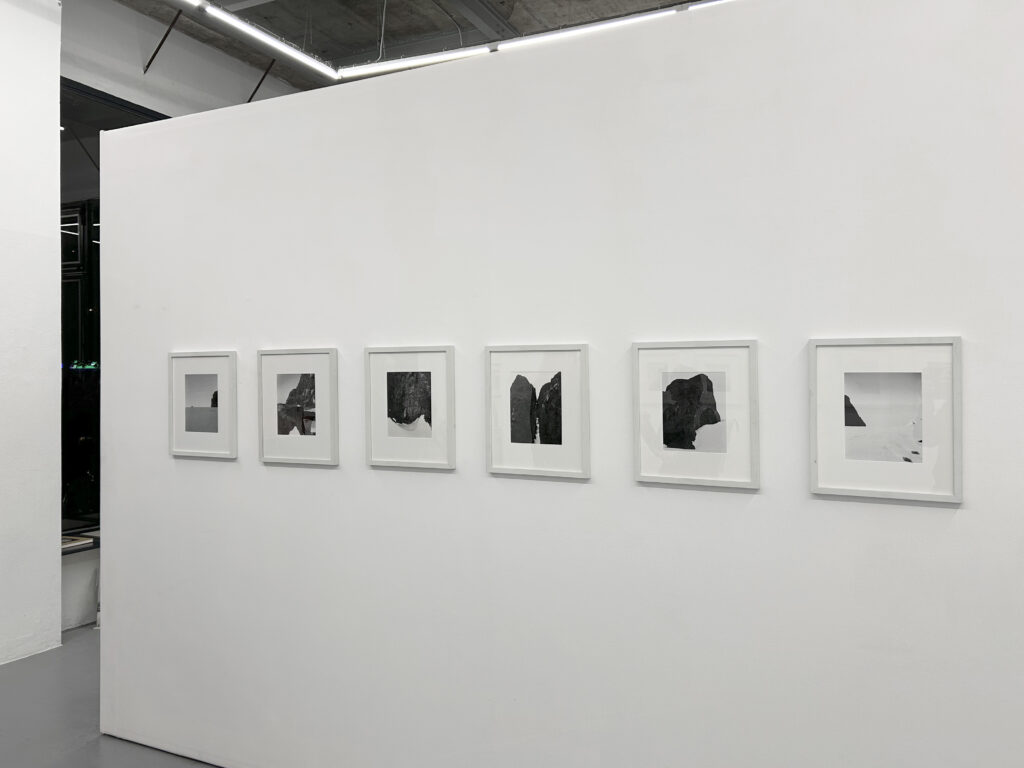
For the first time, works from the series ANTARKTIS (2001), photographed in large format, are now on view in Berlin. In these black-and-white photographs, Johansson presents a contemplative world of amorphous, sculptural forms, largely untouched by human hands and destined to disappear as a result of climate change. Nature here appears as something sublime, not merely a resource. The juxtaposition with a number of images from the serie TOKYO (2004) makes clear how his works can be read: not as places in the conventional sense, but as recurring constellations of light, pattern, form, and structure.
Across Johansson’s numerous series, a field of tension emerges between similarity and difference. Modernity produces recognizable forms – perhaps even a kind of visual uniformity – yet at every site, fractures, shifts, and resistances become visible: a system that unfolds globally while continually rearticulating itself. Neutrality is a method in Johansson’s work. Yet, as discourse on photography has shown, there is no true objectivity. The rigor with which he works is therefore itself an artistic construction – and it is precisely here that his images offer moments of insight and beauty.
Dawid (Björn Dawidsson, *1949 in Örebro, lives in Stockholm) is regarded as a formative representative of postmodern, conceptually expanded photography in Sweden. From an early age, he developed an independent artistic stance that treats photography not as a depiction of reality, but as a medium for reflecting on perception, materiality, and the conditions of the image itself.
As early as the 1970s, Dawid positioned himself against the dominant documentary ideals of the time, establishing photography as an autonomous image form. This approach became publicly evident with the exhibition ROST (rust) (1983): extreme close-ups of oxidized surfaces detach the subject from its context, resist clear identification, and shift attention to parameters such as form, structure, and temporality. Rust appears here not as an object, but as a process – as a visible trace of change and transience. The image no longer functions as a window onto the world, but as an autonomous surface.
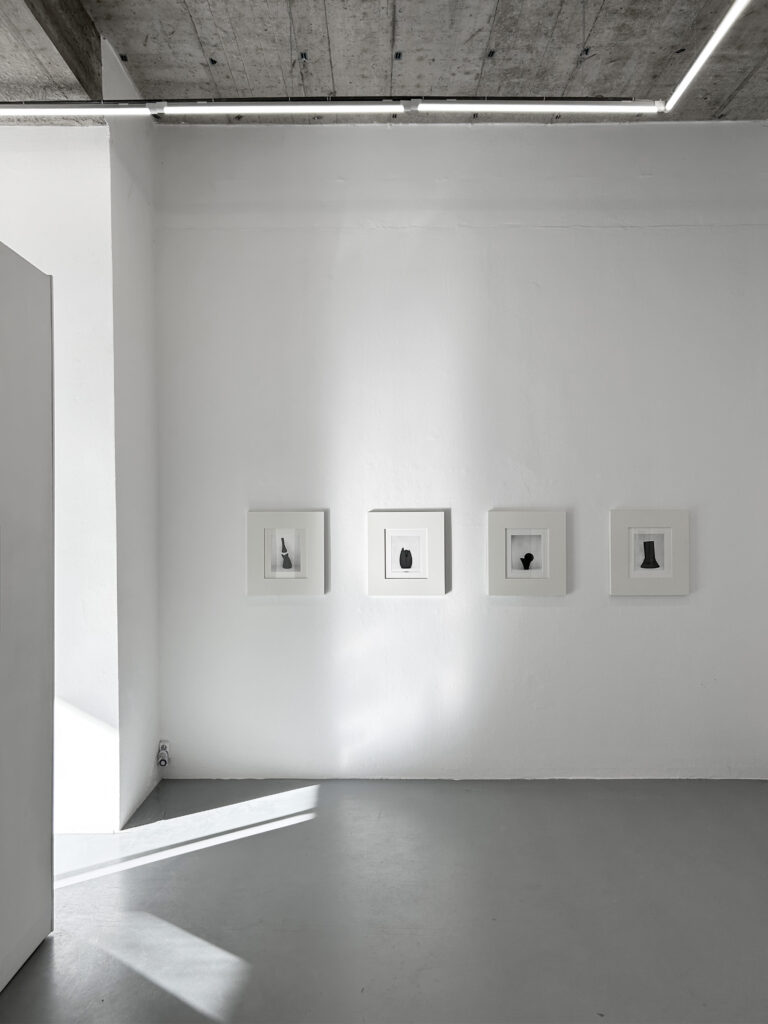
A defining characteristic of Dawid’s work is radical reduction. He dispenses with contextualization and clear references in favor of a focus on seeing itself. In his serial works, he explores minimalist variations in the arrangement of form, light, and material. His works often operate at the boundary between photography and print, between depiction and signage. The status of what is visible remains deliberately unstable: things appear both familiar and strange, their meaning shifting in the act of perception. At the same time, the aesthetic minimalism of his photographs creates a sense of slowness and contemplation.
A recurring element in Dawid’s practice is his engagement with materiality and process. Early on, he experimented with large negative formats. Alongside working with the camera, he also employs cameraless techniques such as chemigrams to foreground the physical nature of the image itself. These experiments challenge the notion of photography as objective evidence and shift attention toward its constructed nature.
In the works from the series BUR (2009), OAS (2018), and ROD (2024) presented at Dorothée Nilsson Gallery, Dawid further condenses these concerns. His work consistently centers on the transformation of the object into an open visual structure. Photographed things lose their functional clarity and become carriers of possibility. The image becomes a site of tentative recognition, where seeing and thinking are inseparably intertwined.
This is also evident in photographs from the series BUR (cage): automobiles stand covered in garages devoid of daylight behind bars. Here, a material object charged with desire is protected from decay and intrusion. In Dawid’s photographs, a formal construct emerges on the aesthetic level—a sculptural installation in which clarity and intention dissolve.
Dawid’s work can be understood as a continuous interrogation of the photographic image: What does an image show—and what eludes visibility? What relationship exists between perception and meaning? His works do not operate through definitive statements, but through openness, permeability, and gaps. They invite viewers to orient themselves within a space of associations shaped by suggestion and displacement. Or, in his own words: “Art does not answer questions. It asks them.”
– Barbara Esch Marowski
Die Dorothée Nilsson Gallery präsentiert mit Arbeiten von Gerry Johansson und Dawid zwei Schlüsselpositionen zeitgenössischer schwedischer Fotokunst.
Im Dialog der beiden Künstler treffen Ebenen wie Raum, Gesellschaft und Struktur auf Wahrnehmung, Zeit und Irritation – Johansson steht für den analytischen, distanzierten Zugang, Dawid für einen phänomenologischen, eher introspektiven Ansatz. Während Johansson fragt, wie die Welt strukturiert ist, fokussiert sich Dawid darauf, wie Wahrnehmung entsteht.
Johansson reduziert die Welt in seinen Bildern, um sie klarer zu erkennen. Dawid arbeitet dagegen mit Abstraktion im Bild und zeigt, wie unsicher unser „Sehen“ ist. Gemeinsam ist beiden Künstlern eine langjährige, konzeptuelle Praxis, der Einsatz von Reduktion als Stilmittel und das Arbeiten in Serien.
Gerry Johansson (*1945 in Örebro, lebt in Höganäs) zählt in Schweden zu den zentralen Positionen einer konzeptuellen, analytischen Fotografie, die das Medium als Instrument des Denkens begreift. Seit den 1980er‐Jahren verfolgt er konsequent seinen künstlerischen Ansatz, die Strukturen der Welt durch systematisches Sehen sichtbar werden zu lassen. Seine Arbeiten entstehen in Werkgruppen und sind oft geografisch definiert.
Seit Jahrzehnten bereist Johansson den Globus, um zu fotografieren. Der Künstler schaut mit seiner Arbeit auf die Strukturen der gebauten Welt: Häuser, Straßen, Infrastrukturen. Gibt es eine universelle Gleichförmigkeit? Produziert die Moderne austauschbare Räume?
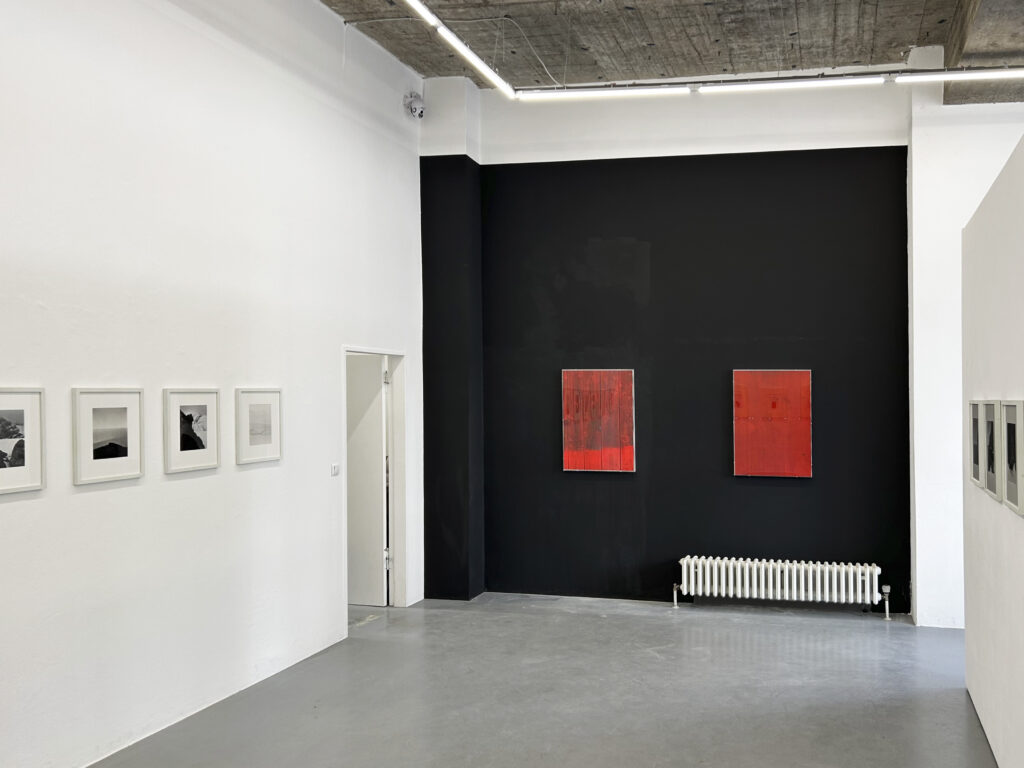
Im Prinzip tastet Johansson die besuchten Orte systematisch mit seiner Kamera ab. In einer radikal reduzierten, formalen Bildsprache sind streng komponierte, zumeist menschenleere Bilder entstanden, die international gelesen werden können. Seine konsequente Bildsprache ist ein wesentlich verbindendes Element, das es zugleich erlaubt, kulturelle Unterschiede im Abgebildeten zu entdecken.
2000/2001 verbrachte Gerry Johansson auf Einladung des Swedish Polar Research Institute zwei Monate auf einer Expedition in der Antarktis. Da der Fokus des Künstlers hauptsächlich auf der Erfassung der Prägung von Landschaft durch Bebauung und kulturelle Einflüsse liegt, war das Arbeiten in unberührtem Raum für ihn eine neue, interessante Erfahrung. Er selbst schreibt dazu: „Du stehst auf 1000 Metern Eis, und du siehst nur Eis, Schnee und einige wenige Bergkuppen, die am Horizont stehen. Die Stille ist total. Die Luft ist kristallklar. Das Licht ist blendend. Die Landschaft wird abstrakt. Es fehlen Perspektiven und Referenzpunkte, die einen Maßstab bieten könnten. Eine tiefe Trostlosigkeit macht sich breit, und eine wohltuende Ruhe kehrt ein.“
Jetzt sind erstmals Exponate aus der Werkgruppe ANTARKTIS (2001), die im Großformat fotografiert wurde, in Berlin zu sehen. Gerry Johansson zeigt uns in diesen Schwarz‐Weiß‐Fotografien eine kontemplativ erscheinende Welt amorpher, von Menschenhand weitestgehend unberührter, skulpturaler Formen, die als Folge des Klimawandels verschwinden werden. Natur ist hier erhaben und nicht nur Ressource. Die Gegenüberstellung mit einigen Aufnahmen aus der Serie TOKYO (2004) macht deutlich, wie seine Bilder gelesen werden können: nicht als Orte im klassischen Sinne, sondern als wiederkehrende Gefüge von Licht, Muster, Gestalt und Struktur.
Über die zahlreichen Werkserien von Gerry Johansson hinweg entsteht ein Spannungsfeld zwischen Ähnlichkeit und Differenz. Die Moderne produziert wiedererkennbare Formen, vielleicht sogar eine Art visuelle Gleichförmigkeit – und zugleich zeigen sich an jedem Ort Brüche, Verschiebungen und Widerstände. Ein System, das sich global entfaltet und immer wieder neu ausprägt. Neutralität ist Methode in der Arbeit von Gerry Johansson. Aber wie der Diskurs zur Fotografie zeigt, gibt es keine Exhibition Text_TWO_DE_v new
echte Objektivität. Daraus folgt: Die Strenge, mit der Johansson arbeitet, ist eine künstlerische Konstruktion. Genau darin schenkt er uns Momente der Erkenntnis und Schönheit.
Dawid (Björn Dawidsson, *1949 in Örebro, lebt in Stockholm) gilt als prägender Vertreter einer postmodernen, konzeptuell erweiterten Fotografie in Schweden. Schon in jungen Jahren entwickelte er eine eigenständige künstlerische Haltung, die Fotografie nicht als Abbild der Wirklichkeit versteht, sondern als Medium der Reflexion über Wahrnehmung, Materialität und die Bedingungen des Bildes selbst.
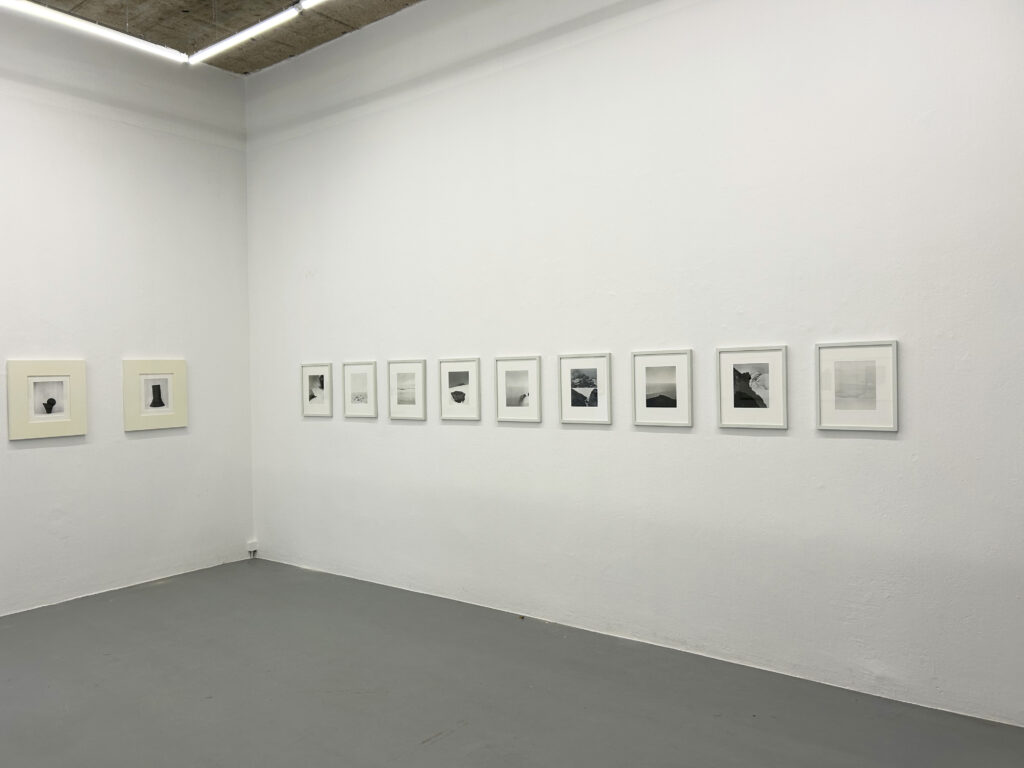
Bereits in den 1970er‐Jahren positionierte sich Dawid entgegen der damals dominierenden dokumentarischen Ideale und formulierte Fotografie als autonome Bildform. Spätestens mit der Ausstellung ROST (1983) wurde diese Haltung öffentlich sichtbar: Extreme Nahaufnahmen oxidierter Oberflächen lösen das Motiv aus seinem Kontext, entziehen es eindeutiger Identifizierbarkeit und verschieben die Aufmerksamkeit auf Parameter wie Form, Struktur und Zeitlichkeit. Rost erscheint hier nicht als Gegenstand, sondern als Prozess – als sichtbare Spur von Veränderung und Vergänglichkeit. Das Bild fungiert nicht länger als Fenster zur Welt, sondern als eigenständige Oberfläche.
Charakteristisch für Dawids Werk ist eine radikale Reduktion. Der Künstler verzichtet auf Kontextualisierung und eindeutige Referenzen zugunsten einer Konzentration auf das Sehen selbst. In seinen seriellen Arbeiten untersucht er minimalistisch Variationen der Anordnung von Formen, Licht und Material. Dabei bewegen sich seine Arbeiten häufig an der Grenze zwischen Fotografie und Grafik, zwischen Abbild und Zeichen. Die Zuordnung des Sichtbaren bleibt dabei bewusst instabil: Dinge erscheinen zugleich vertraut und fremd, ihre Bedeutung verschiebt sich im Akt der Wahrnehmung. Zugleich entsteht im ästhetischen Minimalismus seiner Fotografien ein Moment von Verlangsamung und Kontemplation.
Ein wiederkehrendes Moment ist das Spiel von Dawid mit Materialität und Herstellungsprozess. Früh experimentierte er mit großen Negativformaten. Neben der Arbeit mit dem Fotoapparat nutzt Dawid auch kameralose Verfahren wie Chemigramme, um die physische Beschaffenheit des Bildes selbst sichtbar zu machen. Diese Experimente unterlaufen die Vorstellung von Fotografie als objektivem Beweis und verschieben den Fokus auf ihre eigene Künstlichkeit.
In den in der Dorothée Nilsson Gallery gezeigten Exponaten der Serien BUR (2009), OAS (2018) und ROD (2024) verdichtet Dawid seine Fragestellungen weiter. Stets geht es um die Transformation des Gegenständlichen in eine offene visuelle Struktur. Die fotografierten Dinge verlieren ihre funktionale Eindeutigkeit und werden zu Trägern von Möglichkeiten. Das Bild wird zum Ort eines tastenden Erkennens, in dem sich Sehen und Denken untrennbar verschränken.
So auch in Fotografien der Serie BUR (Käfig): Automobile stehen verhüllt in tageslichtlosen Garagen hinter Gittern. Hier wird ein mit inneren Wünschen besetzter, materieller Gegenstand vor Vergänglichkeit und Übergriffen geschützt. In den Fotografien von Dawid entsteht auf der ästhetischen Ebene ein formales Konstrukt, eine skulpturale Installation, worin sich Eindeutigkeit und Intention auflösen.
Dawids Werk lässt sich als kontinuierliche Befragung des fotografischen Bildes verstehen: Was zeigt ein Bild – und was entzieht sich seiner Sichtbarkeit? Welche Beziehung besteht zwischen Wahrnehmung und Bedeutung? Seine Arbeiten agieren dabei nicht über eindeutige Aussagen, sondern über Offenheit, Durchlässigkeit und Leerstellen. Sie fordern die Betrachterinnen und Betrachter dazu auf, sich in einem zeichenhaften Feld von Andeutungen und Verschiebungen zu orientieren. Oder, in seinen eigenen Worten: „Kunst beantwortet keine Fragen. Sie stellt sie.“ – Barbara Esch Marowski